


Key Takeaway
- Voice Search Optimization (VSO) is the strategic process of tailoring your website’s content to directly answer spoken queries. It focuses on delivering quick, accurate audio responses to users searching via smart devices and virtual assistants.
- Voice algorithms heavily prioritize natural, conversational language and long-tail question phrases. Instead of rigid, typed keywords, your strategy must adapt to how real people speak, focusing heavily on “Who, What, Where, When, Why, and How.”
- While VSO focuses on spoken audio delivery, AEO structures data specifically for AI-driven text summaries (like ChatGPT), and SVO optimizes visual video content. Each algorithm requires a distinct strategy to capture different types of user intent.
- Structuring your pages with Question-based content and dedicated FAQ sections drastically increases your chances of winning the “Position Zero” Featured Snippet. This provides the exact bite-sized, factual answers voice assistants are looking to read aloud.
Table of Contents
Imagine asking your smartphone a question while commuting or multitasking, instead of stopping to type it out—this is the new reality of search behavior. AI and Voice Assistants have completely revolutionized the digital landscape, shifting users toward natural, conversational queries that demand instant, accurate answers.
To stay ahead of the curve in this voice-first era, adapting your digital marketing approach is no longer optional. VSO is the process of optimizing content for voice-based searches. Read on to learn how VSO works and how it differs from AEO and SVO in modern SEO strategies, ensuring your brand stays visible, relevant, and ready to answer when your customers simply speak their minds!
What is Voice Search Optimization (VSO)?
Voice Search Optimization is the strategic process of fine-tuning your website’s content to rank highly in audio-based search results driven by virtual assistants like Siri, Alexa, and Google Assistant. While traditional SEO often targets short, robotic typed keywords (like “best SEO agency”), VSO revolves around natural, conversational language and long-tail question phrases (such as “Who is the best SEO agency near me?”).
Because voice devices typically read out only the single best result, VSO heavily prioritizes winning the “Position Zero” or Featured Snippet. This means your content must deliver direct, concise, and highly structured answers to instantly satisfy the user’s immediate intent, rather than just providing a list of links.
How Voice Search Optimization Works
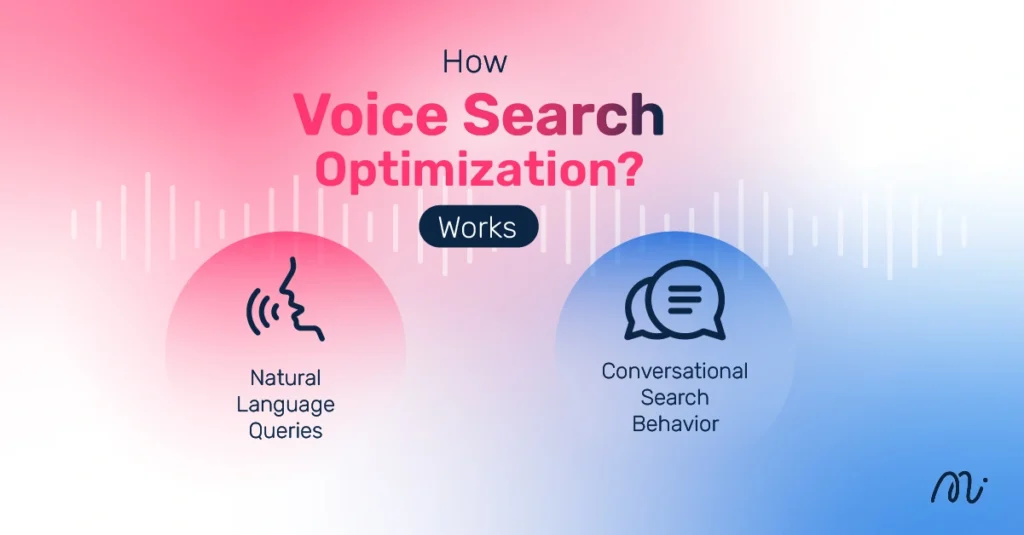
Understanding the mechanics behind voice search is crucial for dominating the modern digital marketing landscape. Unlike traditional text-based queries, voice algorithms prioritize context, intent, and human-like interactions to deliver the single best spoken answer. Let’s break down the core mechanisms driving this technology.
Natural Language Queries
- Moves away from “keyword stuffing”: Voice search algorithms are trained using Natural Language Processing (NLP) to understand complete sentences and everyday speech patterns rather than choppy, fragmented keywords.
- Relies on question words: Users typically start their spoken queries with “Who, What, Where, When, Why, or How.” To rank, your content must directly and clearly answer these specific question-based prompts.
- Focuses on semantics: Search engines analyze the true meaning and context behind the spoken words, ensuring they deliver highly relevant and accurate results rather than just matching text strings.
Conversational Search Behavior
- Driven by immediate, local needs: Voice searches are often performed on the go via mobile devices, making them highly focused on local intent (e.g., “near me” queries) and immediate action (like finding a store’s opening hours).
- Contextual follow-ups: Advanced AI and voice assistants can remember the flow of a conversation, allowing users to ask follow-up questions without repeating the main subject (e.g., asking “Who is the CEO of Google?” followed by “How old is he?”).
- Demands direct, bite-sized answers: Because smart speakers and virtual assistants read out only one top result, algorithms heavily prioritize content that provides concise, direct, and authoritative responses, which are often pulled directly from Featured Snippets.
Who is the Target Audience for Voice Search Optimization?
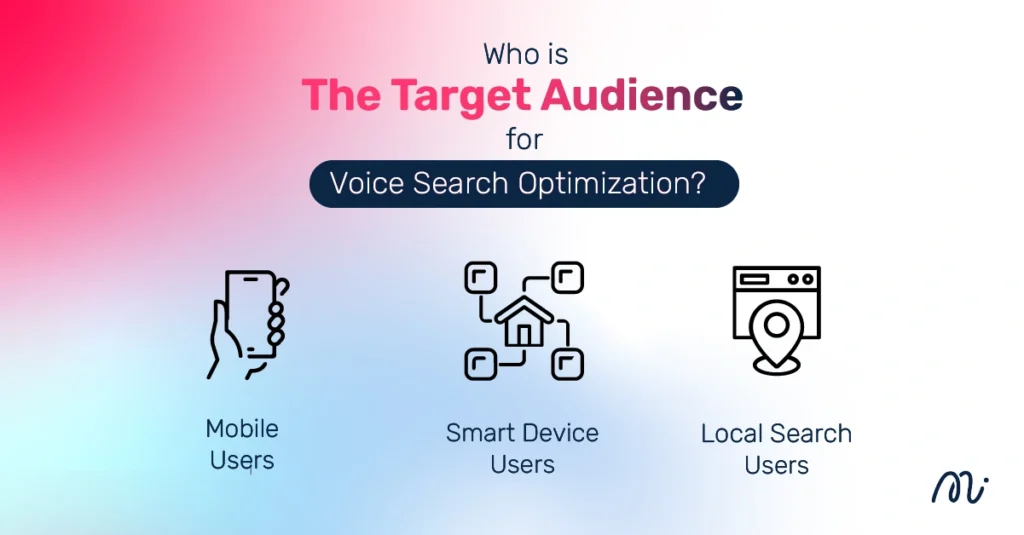
VSO is no longer a futuristic concept; it is an absolute necessity for businesses aiming to capture the growing segment of users who rely on voice commands. If your brand wants to connect with on-the-go consumers seeking instant, hands-free solutions, understanding exactly who is using this technology is your first step to dominating voice search results.
Mobile Users
- On-the-go convenience: Mobile users are the driving force behind voice search, utilizing built-in smartphone assistants like Siri or Google Assistant while multitasking, commuting, or exercising. They prefer speaking over typing for speed and safety, expecting immediate, bite-sized answers.
- Example scenario: A user driving home from work might ask their phone, “Hey Google, where is the nearest drive-thru coffee shop open right now?” to get quick audio directions without taking their hands off the steering wheel.
Smart Device Users
- Integrated home ecosystems: This audience relies heavily on smart speakers (like Amazon Echo, Google Nest, or Apple HomePod) and IoT devices integrated into their living spaces. They use voice search to manage daily routines, ask general knowledge questions, or even make direct voice purchases (v-commerce).
- Example scenario: A busy parent preparing dinner might instruct their smart speaker hands-free, “Alexa, order more olive oil,” or ask, “What is the best substitute for baking soda?” to instantly solve a problem in the kitchen.
Local Search Users
- High-intent “near me” searches: People performing local voice searches are usually at the bottom of the marketing funnel, looking for immediate offline services, storefronts, or products in their specific geographic area. VSO is a goldmine for brick-and-mortar businesses trying to capture this local foot traffic.
- Example scenario: A tourist exploring a new city might ask their wearable device, “Siri, what are the best-rated seafood restaurants near me?” expecting the voice assistant to guide them directly to a highly-reviewed local spot.
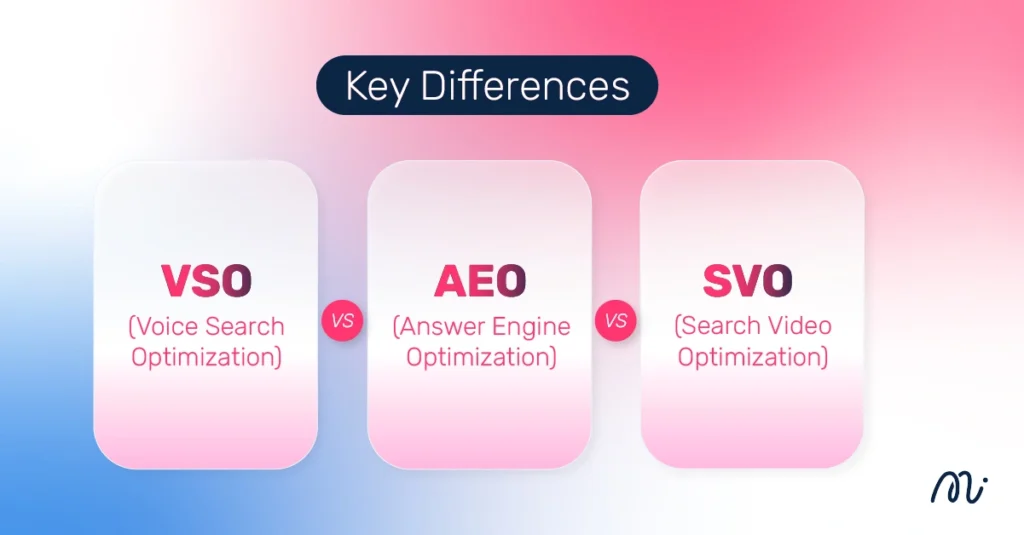
VSO vs AEO vs SVO: Key Differences
As the digital marketing landscape evolves, simply optimizing for traditional text search is no longer enough to stay competitive. Brands must now navigate specialized algorithms designed to deliver answers in distinct formats. Let’s explore how Voice Search Optimization (VSO), Answer Engine Optimization (AEO), and Search Video Optimization (SVO) differ and how they fit into a comprehensive, future-proof SEO strategy.
1. VSO (Voice Search Optimization)
- What it is: The process of optimizing your website’s content to be easily discoverable and read aloud by smart devices in response to spoken, conversational queries.
- How it works & Core Focus: It prioritizes long-tail question keywords (Who, What, Where, When, Why, How) and highly localized, immediate-intent searches (like “near me”). The ultimate goal is to capture the “Position Zero” or Featured Snippet, as voice devices usually read only the single best, most concise answer.
- Example Platforms: Apple Siri, Amazon Alexa, Google Assistant, and various smart home speakers.
2. AEO (Answer Engine Optimization)
- What it is: The strategy of structuring content so that AI-driven answer engines can easily extract, synthesize, and cite your data to provide direct answers to users without them necessarily needing to click a link.
- How it works & Core Focus: While VSO focuses on spoken delivery, AEO is deeply focused on credibility (E-E-A-T), structured data (Schema markup), and delivering factual, highly structured information. It aims to feed AI language models the most authoritative data possible so your brand is referenced in AI-generated summaries.
- Example Platforms: ChatGPT, Perplexity AI, Google AI Overviews (formerly SGE), and Microsoft Copilot.
3. SVO (Search Video Optimization)
- What it is: The practice of fine-tuning video content to rank higher in both dedicated video platforms and standard search engine result pages (SERPs), capturing users who prefer visual, dynamic, and auditory learning over reading text.
- How it works & Core Focus: SVO relies heavily on optimizing video titles, descriptions, tags, and click-worthy thumbnails. It also heavily utilizes closed captions (CC), timestamps, and transcripts so search engine crawlers can accurately “read” and index the video’s context. The main focus is on maximizing visual engagement, watch time, and user retention.
- Example Platforms: YouTube, TikTok, Instagram Reels, and Google Video Search features.
| Optimization Strategy | What it is | How it works & Core Focus | Example Platforms |
| VSO (Voice Search Optimization) | Optimizing content to be easily discovered and read aloud by smart devices in response to spoken, conversational queries. | Prioritizes long-tail question keywords (Who, What, Where) and local intent. The goal is to capture Position Zero (Featured Snippets) for single, concise audio answers. | Apple Siri, Amazon Alexa, Google Assistant, Smart Home Speakers. |
| AEO (Answer Engine Optimization) | Structuring content so AI-driven answer engines can extract, synthesize, and cite your data to provide direct answers. | Focuses heavily on credibility (E-E-A-T), structured data (Schema markup), and factual accuracy to feed AI language models for generated summaries. | ChatGPT, Perplexity AI, Google AI Overviews, Microsoft Copilot. |
| SVO (Search Video Optimization) | Fine-tuning video content to rank higher in both dedicated video platforms and standard search engine result pages (SERPs). | Relies on optimizing titles, descriptions, tags, thumbnails, closed captions (CC), and timestamps to maximize visual engagement and user retention. | YouTube, TikTok, Instagram Reels, Google Video Search. |
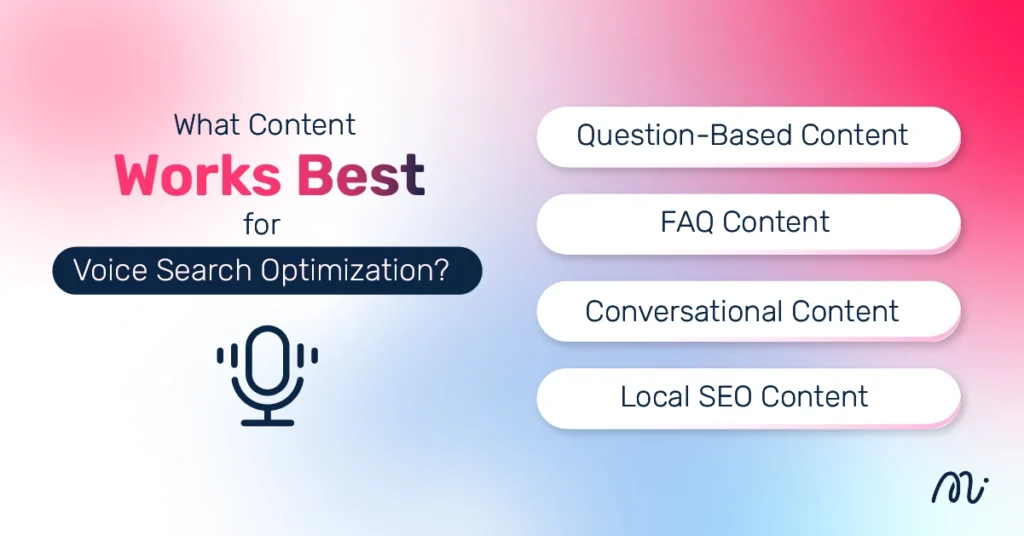
What Content Works Best for Voice Search Optimization
Content that thrives in VSO is essentially content that provides clear, direct, and instant answers. Because voice assistants are designed to read out only the single best response, your web pages must be structured to immediately satisfy the user’s intent without any unnecessary fluff or complex jargon.
Question-Based Content
- Content Example: Articles or guides titled with direct questions, such as “How to create a digital marketing strategy?” or “What is the best time to post on TikTok?”
- Why it works for VSO: When people use voice search, they naturally speak in full sentences using “Who, What, Where, When, Why, and How” rather than typing choppy keywords. Structuring your content around these exact question phrases perfectly matches the user’s spoken intent, drastically increasing your chances of winning the Featured Snippet.
FAQ Content
- Content Example: A dedicated Frequently Asked Questions (FAQ) section at the bottom of a service page, answering specific queries like “How much does SEO cost?” or “Do you offer a free consultation?”
- Why it works for VSO: FAQ pages naturally group a high volume of conversational, long-tail keywords into one highly structured format. Since voice assistants are constantly hunting for bite-sized, factual, and direct answers, a well-organized FAQ section acts as the ultimate data source for quick audio responses.
Conversational Content
- Content Example: Blog posts written in a natural, approachable tone that uses everyday language, such as “If you’re wondering how to boost your website traffic, here are the exact steps we recommend.”
- Why it works for VSO: Voice queries are inherently conversational and human. Writing your content in a natural, empathetic tone—rather than using rigid, robotic corporate speak—helps AI algorithms align your text with the real-life speech patterns of users, making it much more likely to be chosen as the spoken answer.
Local SEO Content
- Content Example: Location-specific landing pages like “Top-rated SEO agency in Bangkok,” or a fully optimized Google Business Profile featuring updated operating hours, directions, and local reviews.
- Why it works for VSO: A massive percentage of mobile voice searches are driven by local intent (e.g., “coffee shops near me” or “is the pharmacy open now?”). Creating hyper-localized content as a core part of your Voice Search Optimization for SEO ensures that when a potential customer asks their smart device for nearby offline solutions, your business is exactly what the voice assistant recommends.
How Voice Search Optimization Impacts SEO Today
Voice search is fundamentally changing the way we approach traditional SEO. As a growing number of users rely on virtual assistants for hands-free convenience, search engines are actively shifting their algorithms to prioritize conversational context over rigid keywords. To stay visible, modern SEO strategies must adapt to this audio-first reality.
Increase in Long-Tail Keywords
- Shifting from short keywords to full phrases: SEO strategies can no longer rely on fragmented terms (like “best laptop”). Instead, they must target long-tail, conversational queries that mimic how real people speak (e.g., “What is the best laptop for video editing under $1,000?”).
- Capturing high-intent traffic: Because spoken queries are highly specific, users asking these long-tail questions are often closer to making a purchasing decision. Optimizing for them helps drive highly qualified, conversion-ready traffic directly to your website.
Importance of Featured Snippets
- The “Position Zero” monopoly: Unlike visual search pages where users can scroll through multiple links, voice assistants typically read aloud only one single answer—the Featured Snippet. Securing this top spot is now more critical than simply ranking #1 in standard text results.
- Demand for direct formatting: To capture these snippets, SEO professionals must structure their content rigorously. Providing concise, 40-50 word answers immediately after a heading makes it incredibly easy for search engines to extract and read your content aloud.
AI Search Integration
- Merging with AI Overviews: As platforms integrate generative AI (like Google’s AI Overviews), the line between traditional optimization and AI Search is blurring. Adapting to VSO AI is now essential, as algorithms synthesize data across the web to generate sophisticated, human-like spoken responses rather than just reading a single webpage.
- Elevated focus on E-E-A-T: Because VSO AI assistants need to provide factually correct spoken answers, they heavily favor highly credible sources. Your SEO strategy must heavily demonstrate Experience, Expertise, Authoritativeness, and Trustworthiness (E-E-A-T) to be trusted and cited by these voice algorithms.
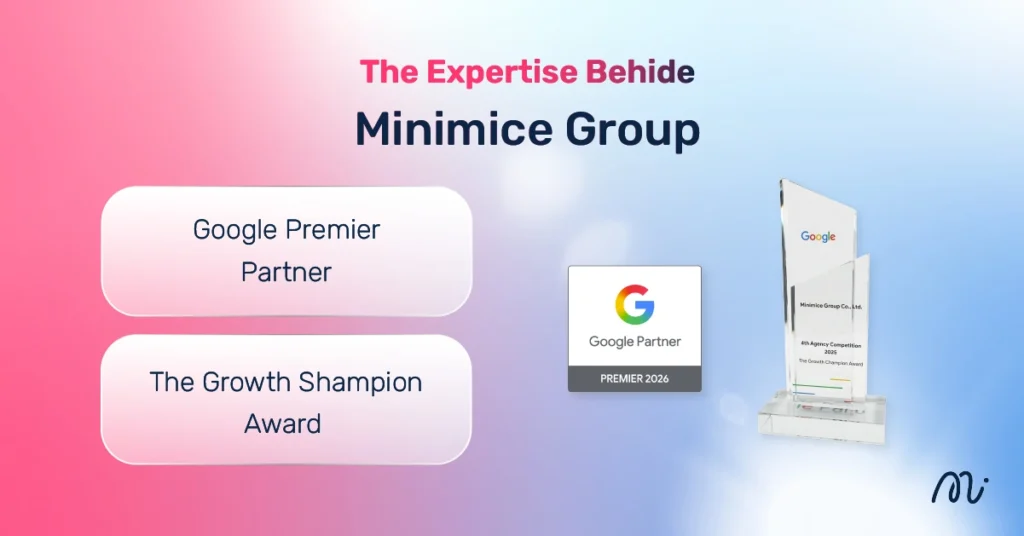
The Expertise Behind Minimice Group
In an era where SEO and AI Search are evolving at an unprecedented pace, executing a successful digital campaign requires a seamless blend of cutting-edge technology and deep human expertise. The dedicated team at Minimice Group brings years of proven experience in crafting data-driven SEO Strategies, high-converting Content Marketing, cutting-edge AI Search Optimization, and ROI-focused Performance Marketing.
Our commitment to driving real, measurable results for our clients is not just a promise—it is actively recognized by industry-leading platforms and prestigious awards.
Google Premier Partner
Minimice Group is incredibly proud to be certified as a Google Premier Partner, which stands as the highest and most exclusive tier within the Google Partner Program. This elite status is awarded to only a small fraction of top-performing agencies that demonstrate profound expertise in managing and scaling campaigns.
It guarantees that our team possesses the advanced technical skills and strategic insights required to maximize your ROI, ensuring your brand reaches the right audience at the perfect moment for optimal business growth.
The Growth Champion Award
Earning the prestigious Growth Champion Award is a direct reflection of our relentless ability to help businesses scale exponentially through highly effective, tailor-made digital marketing strategies. This accolade highlights our success in turning complex market challenges into profitable, real-world opportunities for our clients across various competitive industries.
It proves that we don’t just aim for superficial vanity metrics; we focus on driving sustainable, long-term revenue growth that elevates your business far above the competition.
Conclusion
As search behavior rapidly shifts from typing to talking, Voice Search Optimization is no longer a future trend—it is a present-day necessity for survival. Unlike traditional text-based SEO, VSO demands highly conversational, direct, and question-based content specifically designed to capture the coveted “Position Zero” or Featured Snippet.
Understanding the technical nuances between VSO, AEO, and SVO allows brands to dominate natural language queries, connect instantly with high-intent mobile and local users, and align perfectly with modern AI search algorithms. Businesses should care deeply about voice search today because it builds unparalleled trust, visibility, and authority, ensuring they are the exact and only answer when their customers simply speak their needs.
Ready to make your brand the definitive voice in your industry? Partner with Minimice Group, an award-winning Google Premier Partner, for comprehensive SEO strategies, AI Search Optimization, Content Marketing, and ROI-driven Performance Marketing. Let our experts scale your business and future-proof your digital presence today!
FAQs
Is VSO necessary for B2B businesses, or is it only for B2C/Local?
decision-makers frequently use voice assistants to ask quick, informational questions about industry terms or software. Optimizing for informational long-tail queries helps B2B brands build early-stage authority and capture top-of-funnel traffic.
How do I target “Position Zero” (Featured Snippets) for voice search results?
You must provide direct, concise answers (around 40-50 words) immediately following a clear question-based heading. Utilizing structured formats like bulleted lists, tables, and dedicated FAQ sections makes it incredibly easy for search engine crawlers to extract and read your answer aloud.
How do I optimize my Google Business Profile for “near me” voice searches?
Ensure your profile is 100% complete with an accurate NAP (Name, Address, Phone number), up-to-date operating hours, and highly specific local categories. Consistently collecting positive reviews and keeping your location data precise sends strong relevance signals to local voice search algorithms.
Is voice search better than typing?
It depends entirely on the user’s context, but voice search is undeniably faster and much safer for hands-free multitasking or on-the-go situations. However, traditional typing still remains the preferred method for complex, in-depth research that requires comparing multiple visual sources.
Is voice search powered by AI??
Absolutely. Voice search relies heavily on advanced Artificial Intelligence and Natural Language Processing (NLP) to accurately hear your words, understand the true contextual meaning behind your sentence, and instantly fetch the most relevant conversational answer.